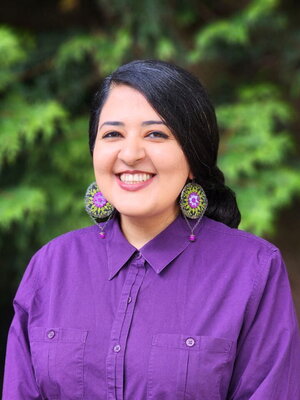
Atyeh Ashtari is a Tenure Track Assistant Professor of Urban Planning and Design at the University of Washington Tacoma.
We asked Atyeh about her current work and here are snippets of what she shared:
What is the focus of your current work and/or research?
As an early-career scholar based in the U.S. with roots in Iran, my work is grounded in building situated, transnational, and translocal solidarities with and beyond the communities I engage with. Community — understood as both locally rooted and globally connected — sits at the center of my research. Broadly, my scholarship falls under the umbrella of intersectional humane urbanism and follows four interrelated strands: community-based economies and development led by and for marginalized communities; feminist and anti-racist storytelling; spatial justice through a gendered lens; and feminist reconfigurations of planning theory and practice.
Currently, I am a co-Principal Investigator on a collaborative digital storytelling project known as the Humane Urbanisms Project (HUP) with my dear colleagues Faranak Miraftab, Ken Salo, and Efadul Huq (GRID Alumni). This multi-sited and multi-institutional transnational project focuses on constructing solidarities for humane urbanisms through a multi-lingual open access storytelling platform. This platform provides a space where urban movements and grassroots collectives in marginalized communities of the Global South share their stories of radical care, hope, and alternative imagined futures. I am also an active member of the Diverse Solidarity Economies (DISE) collective, where I collaborate on a project developing an inventory of Black feminist theoretical contributions to political economy for economists everywhere working with all racialized and otherwise marginalized women across different contexts.
How has your GRID minor influenced your career?
The Gender Relations in International Development minor had a formative influence on my academic trajectory. The feminist and intersectional frameworks that continue to shape my research today, including my focus on gendered practices, solidarity economies, and social reproduction, were all to some degree part of the themes we explored in this program.
Beyond the intellectual foundations, the program offered meaningful support and recognition of my work as an emerging young scholar through awards and fellowships such as the Barbara Yates Fellowship and the Evelyne Accad and Paul Vieille Award. Those early university-level recognitions ultimately set the stage for national and international acknowledgment through organizations such as the American Association of University Women and the International Center for Research on Women. GRID also created space for critical scholarship to reach audiences beyond disciplinary silos, connecting me with established interdisciplinary thinkers whose feedback pushed my thinking in new directions. It provided platforms and resources that shaped some of my earliest and most significant scholarly engagements, including the opportunity to co-organize a multilingual transnational panel titled "Women at the Frontlines against COVID-19: Leadership from Informal Settlements in South Africa, Iran, and Argentina."
What advice would you offer to current GRID students?
Lean into the interdisciplinary community that GRID makes possible. It is one of the program's greatest gifts. Use it to build genuine transnational understanding, and with any luck, lasting friendships and solidarities. During my time in the program, GRID gave students real agency in deciding how to use available resources to bring their ideas to life. Take that seriously. Use your voice, pursue the projects that matter to you, and let the program amplify rather than define your vision. The goal is to create meaningful impact within the university and, more importantly, with and for the broader communities you are committed to serving.
How can we follow your work on social media? (Twitter, LinkedIn, Instagram, personal website, etc.)